Buyer checklist
How We Compared These Games for 8 to 13 Year Olds: Each of These Teaches One Grown-Up Mechanic
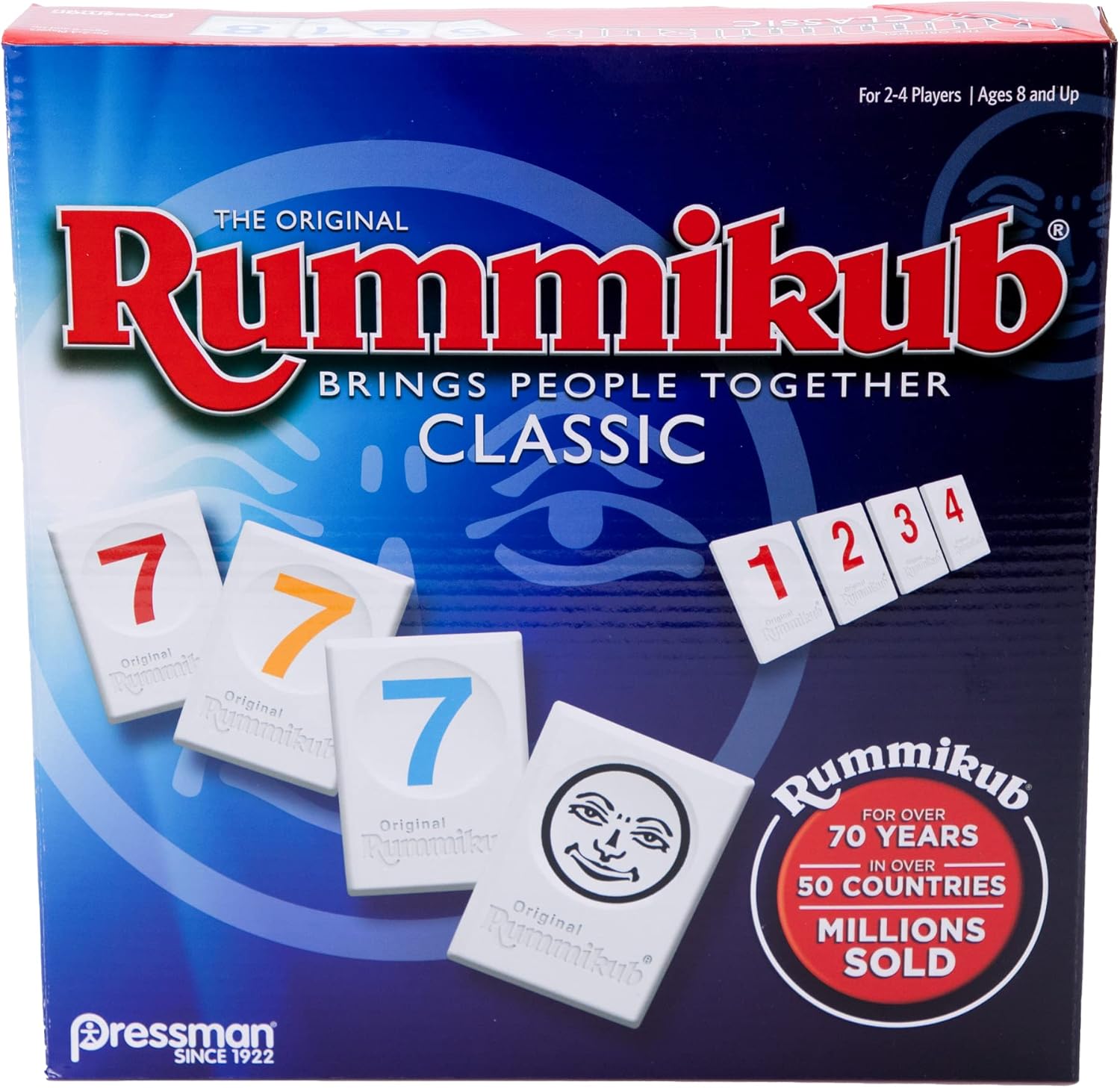
All five publishers state ages, player counts and in two cases playtimes, and those figures are quoted below as published, read off the live Amazon.com listings including the detail tables. We cross-checked each age in both places the listings give it and found the usual disagreements: Rummikub says ages 8 and up in its bullets and Adult in its age field, Blokus XL says 2 to 4 players in its bullets and 4 in its player field, and Skull King's manufacturer age field reads 8 to 14 years, an upper bound no trick-taking game actually has. Rather than ranking these by quality, which at this age is mostly a question of the child, we have organised them by the mechanic each one introduces, because that is the thing that changes between a seven-year-old's game and a thirteen-year-old's. Sales figures and Kickstarter claims are the publishers' own. We did not play these, time a session or test any difficulty claim.
Games for 8 to 13 Year Olds: Each of These Teaches One Grown-Up Mechanic Buying Questions
What actually changes between a 7-year-old and a 12-year-old game?
Three things, and they arrive roughly in order. First, hidden information: holding cards other players cannot see, and acting on that, which Exploding Kittens introduces gently. Second, interaction, meaning playing something specifically because of what it does to another player rather than what it does for you, which is what Blokus is entirely about. Third, commitment under uncertainty, where you declare an intention before you know whether you can deliver, which is what Skull King's bidding does and which is the last of the three to click, usually around ten or eleven. A game that only asks a child to move a piece is a younger game whatever the box says.
Which of these works best for a large group?
Skull King at 2 to 8 players, with Exploding Kittens next at 2 to 5. Skull King is the only game here designed to scale that far, and trick-taking games get better with more people because there are more hands to read. The Mind and Rummikub both top out at 4, and Blokus XL at 4, so for a birthday party or a family gathering with cousins, Skull King is the pick. For a long car journey, Exploding Kittens is the one the publisher specifically calls compact and portable.
Is a cooperative game too easy for this age?
Not if the difficulty is in the communication rather than the rules, which is exactly what The Mind does. Players must play cards in ascending order without speaking, so the challenge is reading other people, inventing silent signals and timing, and it is genuinely hard for adults. Cooperative at eight or ten is a different proposition from cooperative at three: at three it removes the sting of losing, at ten it creates a shared problem, which is a much better reason to buy one. It is also the game on this page most likely to involve the whole table laughing.