Best Mechanic's Socket & Ratchet Sets (SAE/Metric) Compared
We compared real spec sheets for GearWrench, Tekton, DeWalt, Craftsman, and Stanley socket sets to separate genuine piece counts from padded marketing numbers.
Quick answer
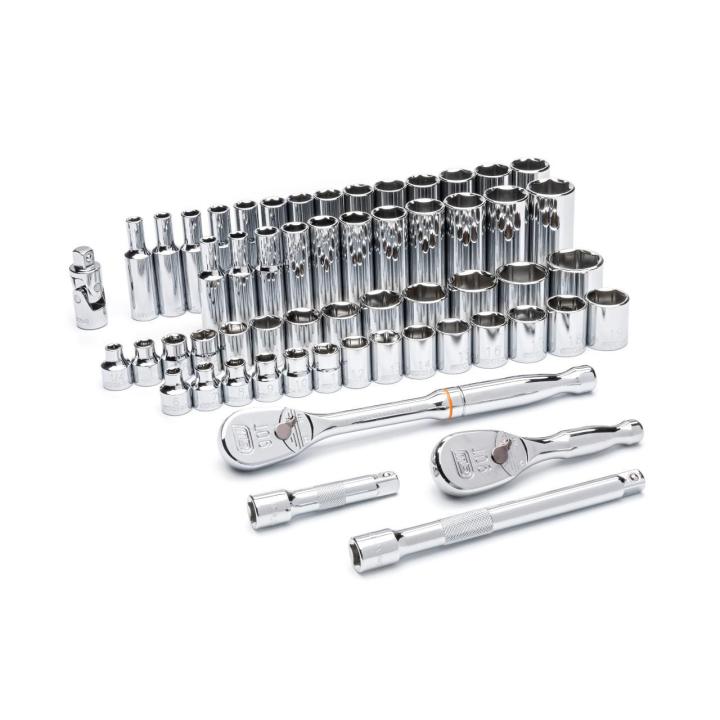
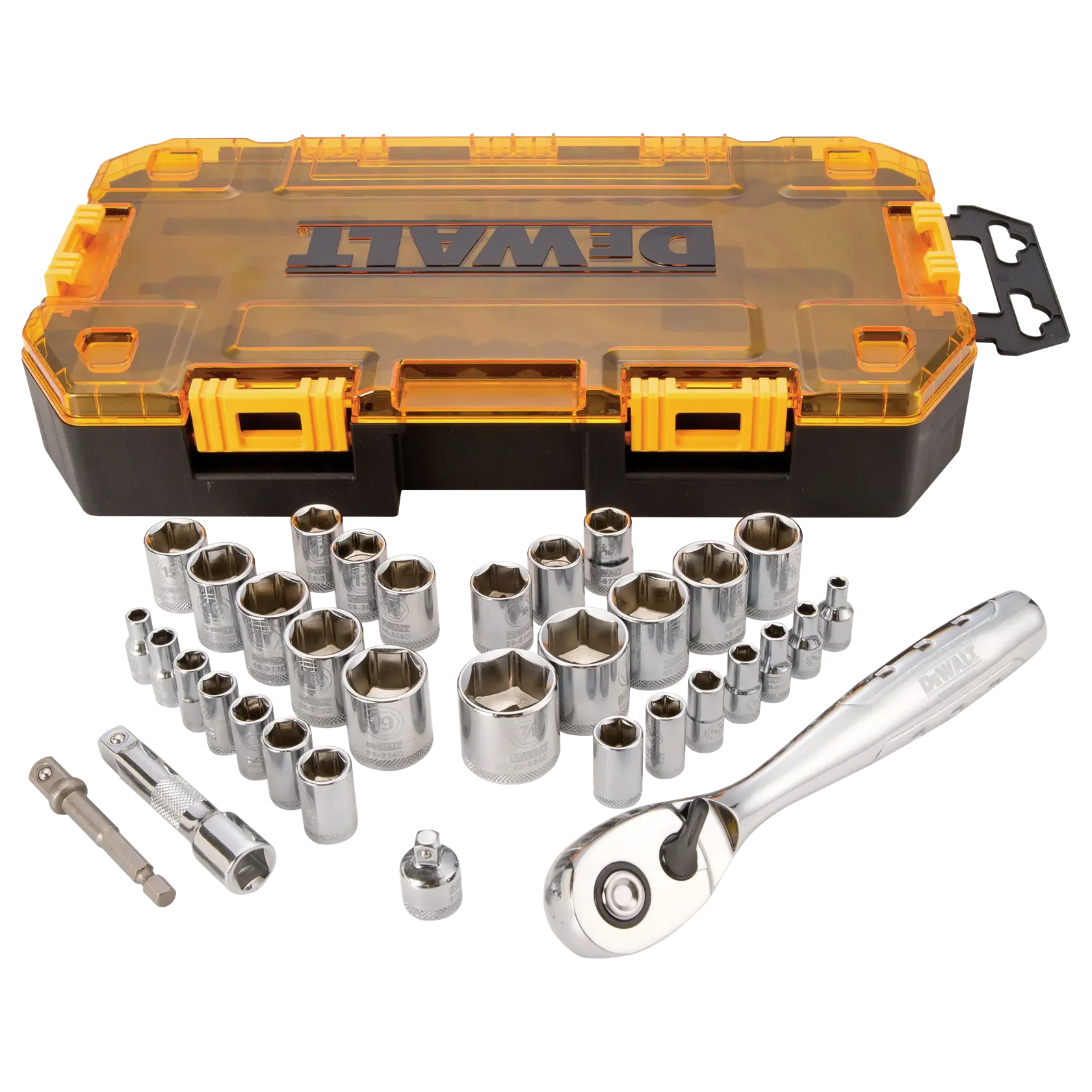
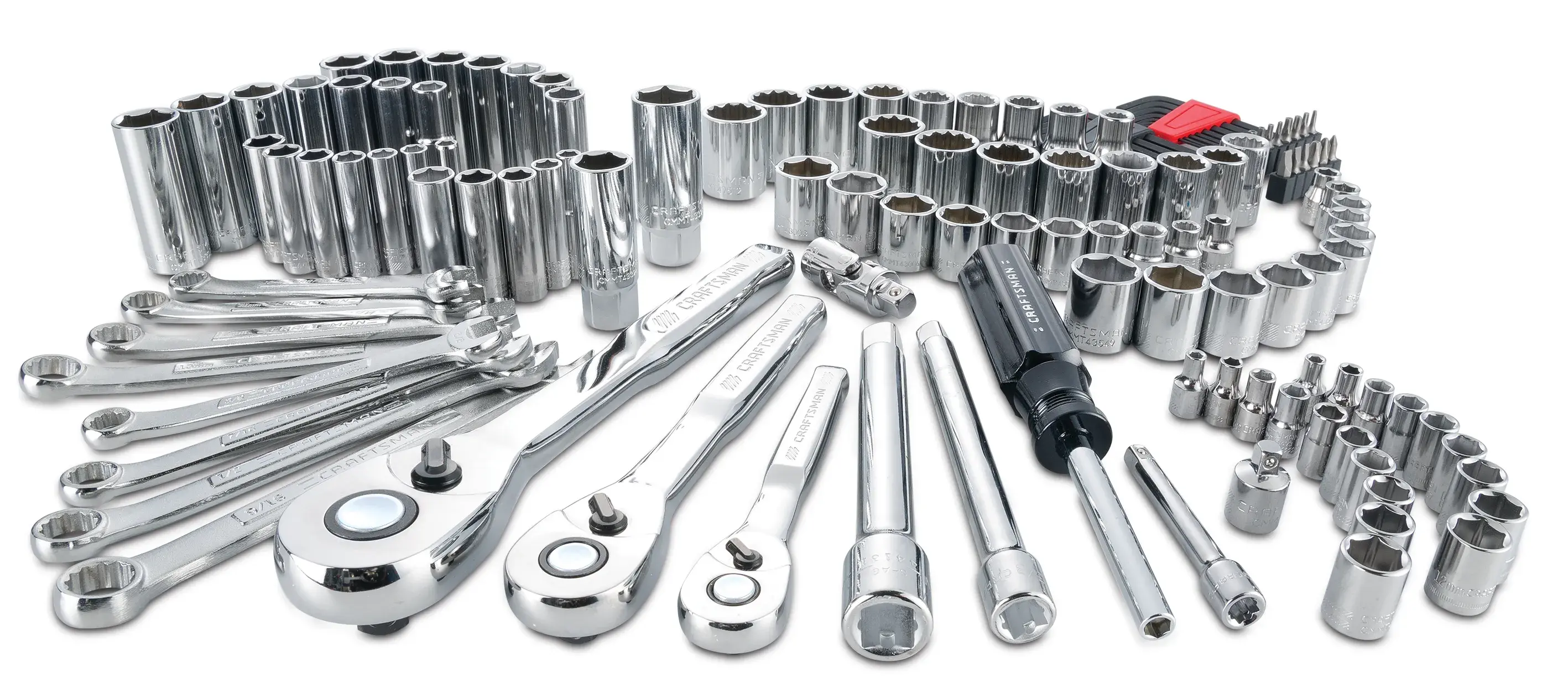
For a single, honestly-sized 3/8-inch set, the GearWrench 80550 is the strongest all-around pick: its 57 pieces skew heavily toward actual sockets rather than filler, and its 90-tooth, 4-degree-arc ratchet matches specs found in far pricier sets. If you want broader SAE/metric range (up to 1 inch and 24mm) plus a breaker bar and universal joint in the box, the Tekton SKT15311 is worth its higher price. Buyers who need three drive sizes in one case should look at the Craftsman CMMT12024, though Craftsman's own website lists two different piece counts (135 and 138) for the same set, which we could not reconcile. The DeWalt DWMT73804 is the smallest, most padding-free set here at 34 pieces. Note that the Milwaukee 48-22-9008 originally considered for this guide has no legitimate Amazon listing, so we substituted the Stanley STMT74858, a real, authentically-sold 97-piece set, and disclose that substitution below.
Updated September 2026Advertising DisclosureTop Relevant
✓Carefully researchedProduct data reviewed
◇Independent picksClear comparison criteria
▣Practical resultsBuilt around real use cases
$Price & valueFeatures compared clearly
Buyer checklist
How We Compared These Mechanic's Socket and Ratchet Sets: SAE/Metric Sets Worth Buying
We pulled specs directly from each manufacturer's own product pages (GearWrench, Tekton, DeWalt, Craftsman, Stanley, and Milwaukee), cross-checked them against the exact listings indexed on Amazon.com, and verified secondary retail listings (Home Depot, Lowe's, Walmart) where a manufacturer page was unavailable. We did not physically test these sets side by side; our comparison is based on published specifications and documented piece-count math, not hands-on durability testing, and we say so explicitly anywhere we can't verify a claim.
Mechanic's Socket and Ratchet Sets: SAE/Metric Sets Worth Buying Buying Questions
Does a higher piece count actually mean a better socket set?
Not reliably. Piece-count inflation is well documented in this category: some sets count the case, extension bars, and every SAE and metric size as separate 'pieces' to reach numbers like 100+, when the number of genuinely distinct, load-bearing sockets is much smaller. The DeWalt DWMT73804 in this guide, for example, lists only 34 pieces but nearly all of them are functional sockets and drive tools rather than padding, while some 135+ piece sets bundle in extras. Always check the manufacturer's own itemized breakdown, not just the headline number on the box.
What's the practical difference between a 72-tooth and a 120-tooth ratchet?
Tooth count determines how far you have to swing the ratchet handle before it engages the next tooth (the 'arc swing'). A 72-tooth ratchet needs roughly a 5-degree swing, a 90-tooth ratchet needs about 4 degrees, and higher-tooth-count ratchets (some premium lines go up to 120 teeth) can need as little as 3 degrees. In practice this mostly matters in tight, confined spaces like behind an engine block or under a dash, where a wide swing arc means you can't get a full turn between obstructions. For open, easy-access bolts, the difference is rarely noticeable.
Do I need both SAE and metric sockets for US-based car and home work?
For almost any US garage or home toolbox, yes. Domestic vehicles still use a mix of standard and metric fasteners, essentially all imported and many modern American-brand vehicles use metric hardware throughout, and metric sizes also show up on bicycles, appliances, and imported furniture and equipment. A SAE-only or metric-only set will leave real gaps for most households; every set in this guide includes both.