Buyer checklist
How We Compared These Games Like Uno: Five Cards Games That Each Change One Thing About It
All five are published card games with specifications stated by their publishers, and the ages, player counts, card counts and playtimes below are quoted as published from the live Amazon.com listings including the detail tables. We organised them by mechanic rather than by preference, because every one of these is recommended as an Uno alternative and the useful question is which Uno rule each one replaces. Two things came out of reading the fine print. First, accessibility: Mattel states that both Phase 10 and Skip-Bo Deluxe are colourblind accessible using graphic symbols on each card, which is a significant and rarely-mentioned feature in a genre built on matching colours. Second, the usual age-field contradictions: Dutch Blitz lists an age range of Teen alongside a manufacturer recommended age of 8 to 12 years, which implies an upper limit that a real-time card game does not have, and both DOS and Skip-Bo give a single number in a player-count field where their bullets give a range. We did not play these or test any reflex or skill claim.
Games Like Uno: Five Cards Games That Each Change One Thing About It Buying Questions
Which of these is best if someone at the table is colourblind?
Phase 10 or Skip-Bo Deluxe, and this is the most useful thing on the page. Mattel states both are colourblind accessible, with special graphic symbols printed on each card alongside the colour so a player with any form of colour vision deficiency can identify suits without relying on hue. That matters disproportionately here because the whole Uno family is built on matching colours, which makes the standard version of these games genuinely difficult for roughly one in twelve men. DOS, Dutch Blitz and Taco Cat Goat Cheese Pizza make no such claim.
What is the difference between a shedding game and a sequencing game?
What counts as a legal play. In a shedding game like Uno or DOS you play a card that matches something on the table, and the goal is simply to empty your hand. In a sequencing game like Skip-Bo you must build piles in strict ascending order, so your cards are only playable when the stack has reached the right number, and much of the skill is in holding cards back and blocking others. The practical consequence is that sequencing games reward planning across several turns while shedding games reward reacting to what is in front of you.
Which works for a large group?
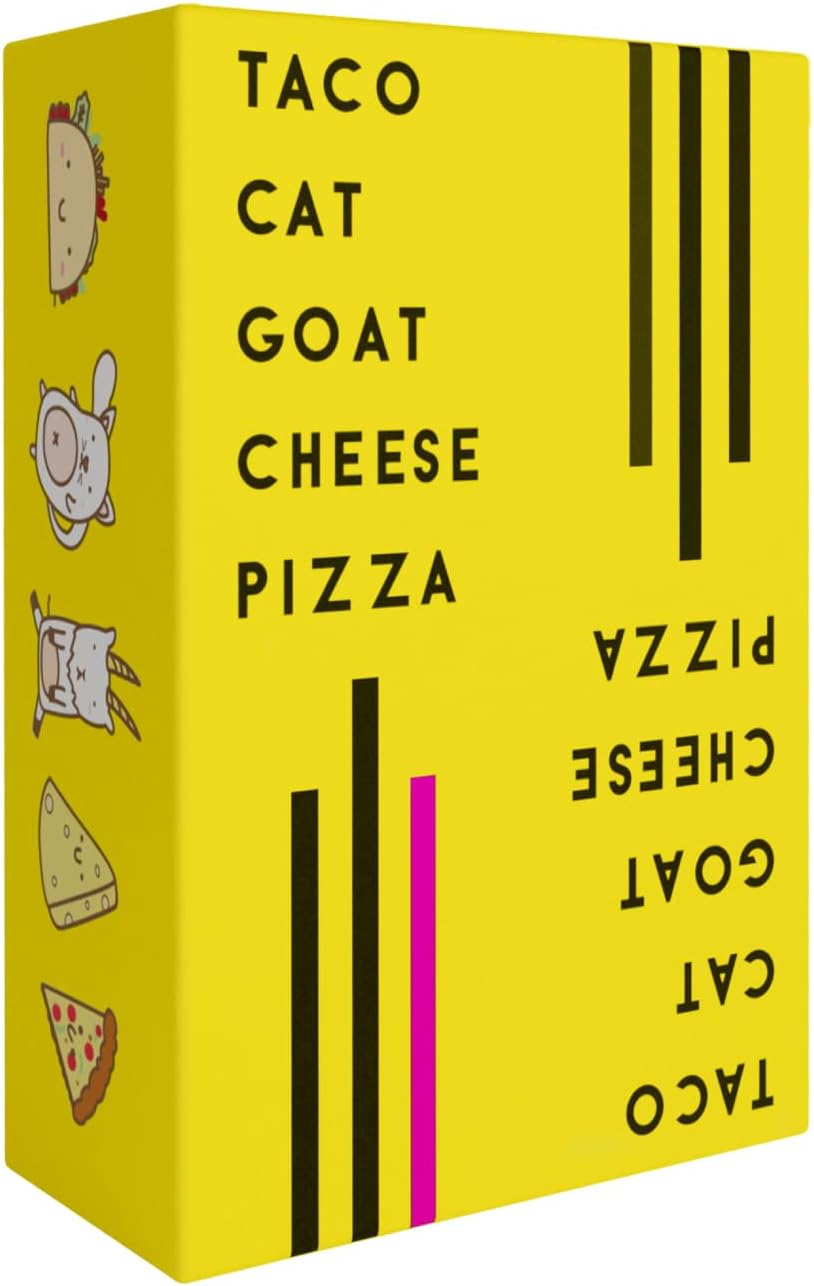
Taco Cat Goat Cheese Pizza at 2 to 8 players, then Phase 10 and Skip-Bo at 2 to 6. DOS and Dutch Blitz both cap at four, and in Dutch Blitz's case that is a physical constraint rather than a rules one: everyone plays into a shared central area at the same time, so more than four hands reaching for the same piles stops working. If the group size is unpredictable, Taco Cat is the one to own, and its ten minute rounds mean people can join between hands.