Buyer checklist
How We Compared These Five Things Worth Fixing to a Wall, Starting With the One That Matters Most
Only one of these five is an established brand. Master Magnetics is a US manufacturer that has been trading since 1976 and publishes real material and process detail, down to the strontium carbonate and iron oxide composition and the sintering temperature. The other four are Amazon-brand products with no manufacturer website behind them, so for those the product listing is the only published specification that exists. Rather than dress that up, we did something more useful: we read each listing's own specification bullets directly from the live Amazon.com page and quoted the figures that are actually checkable, hardware sizes, hook counts, thicknesses, capacities, warranty lengths, and we have said in each section where a claim is a listing claim. Two claims we refused to repeat as fact: a base described as nearly 30% thicker than others, with no stated comparison, and a towel holder described as holding towels better than standard hooks, which is not a measurable thing. We have not installed, loaded or load-tested any of these, and nothing below is a test result. The comparison axis is deliberately blunt: what it holds, and what it fixes to.
Five Things Worth Fixing to a Wall, Starting With the One That Matters Most Buying Questions
Do anti-tip straps actually need to go into a stud?
Into solid structure, yes, which usually means a wall stud rather than plasterboard alone. An anti-tip strap only works if both ends hold: the furniture end into the cabinet's own frame, and the wall end into something that will not pull out under load. A plasterboard fixing can be adequate for small items with the right anchor, but for a chest of drawers a child can climb, the stud is the point. The IMtKotW set in this guide includes wall anchors and screws, and also offers a metal C-clamp option for a desk up to 1.77 inches thick, which sidesteps the wall question entirely where it applies.
Adhesive or screws for wall hooks?
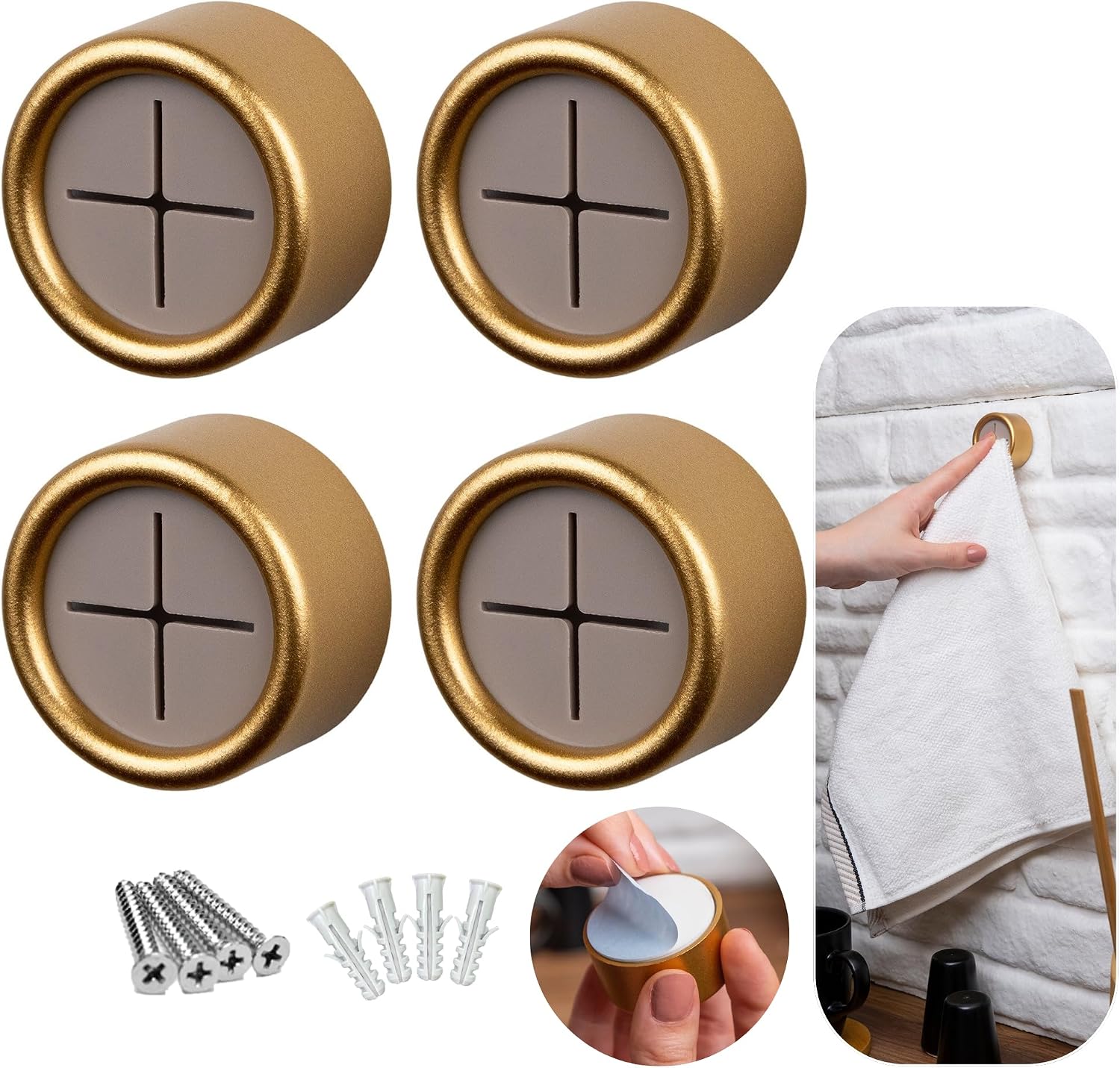
Screws for anything that holds weight you would mind dropping; adhesive for light, dry, low-stakes loads. The HEFA holders here ship both ways, with Orafol self-adhesive tape already applied plus screws and dowels in the box, which is the sensible way to sell a product like this. Two practical limits on adhesive: it needs a flat non-porous surface, so textured paint and tile grout lines are out, and bathroom humidity shortens its life. If you are renting and cannot drill, adhesive on a tiled splashback is a reasonable bet for a dish towel and a bad one for a wet bath sheet.
How much can a 16 lb magnet actually hold?
Less than 16 lb in almost every real use, and that is not the manufacturer being dishonest. Pull strength is measured perpendicular to a clean, flat, thick steel surface, pulling straight away from it. Hang something from the knob instead and the force becomes shear, which a magnet resists far less well. Paint, dust, a thin or curved panel, or a powder-coated finish all reduce it further. Master Magnetics states the 16 lb figure is on clean, flat metal, which is the honest framing. Treat it as a comparison between magnets, not as a load rating for your door.