TopFiveFind may earn from qualifying purchases. Rankings are editorial starting points, not hands-on test claims.
Home/Vacuum Sealers/K&F CONCEPT 67mm MCUV Lens Protection Filter High Definition Optical Glass
K&F CONCEPT 67mm MCUV Lens Protection Filter High Definition Optical GlassProduct image from current catalog data
Best for Preventing the Problem

K&F CONCEPT 67mm MCUV Lens Protection Filter High Definition Optical Glass

By K&F Concept

9.1Excellent matchFeature and use-case score

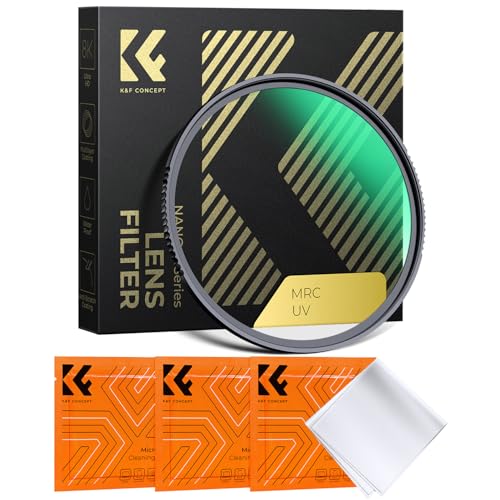
A 67mm multi-coated protection filter on a 3.3mm aluminium frame, in a cleaning guide because the cheapest way to clean a front element is to never let anything reach it.

  • 67mm filter thread, built on Japanese AGC optical glass in a slim frame published at 3.3mm to...
  • Multi-coated to repel oil and water and resist scratching, acting as a sacrificial surface in...
  • K&F publishes 94% light transmission for its 18-layer K-Series coating and 99.6% for the 28-l...
See Price at the store →Price, delivery, and configuration can change at the retailer.
ByTopFiveFind Research Desk

How this was made: AI-assisted research and drafting organize the evidence. Exact product identity, source claims, owner-feedback patterns, conflicts, and publication checks are documented before indexing. No hands-on or human-expert testing is claimed unless a page explicitly shows that evidence. Read the full methodology.

Best fitBest for Preventing the Problem
CategoryVacuum Sealers
BrandK&F Concept
Catalog score9.1 / 10

Product overview

K&F Concept 67mm MCUV Lens Protection Filter: What to Know

Thread size is the first thing to get right and the most common reason a filter goes back. This listing is 67mm, which is the filter thread diameter of your lens, not its focal length and not its front barrel size. The number is printed on the lens barrel or inside the cap, usually after a diameter symbol. K&F sells the same filter in 77mm, 82mm and most sizes in between as separate ASINs, and there is no adapting a 67mm filter onto a 77mm lens without a step ring.

The optical side is where the series matters. K&F builds these on Japanese AGC optical glass in a slim aluminium frame published at 3.3mm thick, which is thin enough to avoid vignetting on wide lenses, and the whole value of the filter rests on the coating: K&F's figures are 94% light transmission for the 18-layer K-Series coating and 99.6% for the 28-layer Nano-X, and the coating is what repels oil and water and resists scratching. A protection filter is a sacrificial surface, you clean the filter instead of the lens, and you replace it when it is too scratched to clean.

Now the discrepancy we are not going to paper over. The current listing title on this ASIN says only high definition optical glass, with no coating count. In tracing the listing we found title and URL variants on the same ASIN citing both 18 multi-layer coatings and 28 multi-layer coatings, and 94% versus 99.6% transmission is a wide enough gap to matter if you shoot into the sun or point lights. K&F's own site refused our requests, so we cannot settle it from the manufacturer. Read the listing bullets on the day you buy, and if the coating count is not stated, assume the cheaper 18-layer specification.

Key Listed Features

01

67mm filter thread, built on Japanese AGC optical glass in a slim frame published at 3.3mm to avoid vignetting

02

Multi-coated to repel oil and water and resist scratching, acting as a sacrificial surface in front of the lens

03

K&F publishes 94% light transmission for its 18-layer K-Series coating and 99.6% for the 28-layer Nano-X coating

04

Sold across the full range of thread sizes on separate ASINs, including 77mm and 82mm

Buying questions

Quick Answers

Does a UV filter do anything for UV on a digital camera?

Effectively no, and it is worth saying so. Digital sensors have their own UV and IR cut filtering, so the UV-blocking function that gave these filters their name is a film-era inheritance. What you are actually buying is a coated, flat, sacrificial piece of glass in front of the lens. That is a real benefit, it is just not the one in the product name.

Will it degrade image quality?

Any extra air-to-glass surface can add flare and very slightly reduce transmission, which is exactly what the coating exists to minimise, hence K&F's published 94% figure for the 18-layer version and 99.6% for the 28-layer. In normal light the difference is hard to see. Shooting into a bright source is where a cheap or uncoated filter shows itself, and where taking it off for a few frames is the sensible move.