TopFiveFind may earn from qualifying purchases. Rankings are editorial starting points, not hands-on test claims.
Home/Vacuum Sealers/OUTFOXED, A CLASSIC WHO DUNNIT GAME FOR PRESCHOOLERS, 4 players
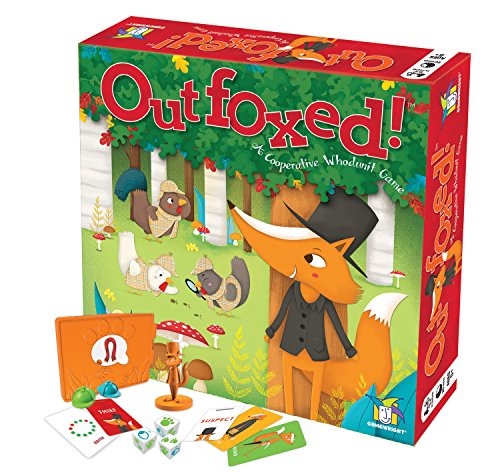
OUTFOXED, A CLASSIC WHO DUNNIT GAME FOR PRESCHOOLERS, 4 playersProduct image from current catalog data
Best Cooperative Game

OUTFOXED, A CLASSIC WHO DUNNIT GAME FOR PRESCHOOLERS, 4 players

By Gamewright

9.4Excellent matchFeature and use-case score

Nobody loses to anybody. Published by Gamewright for ages 5 and up, 2 to 4 players, 20 minutes, with the table working together to identify a thieving fox before it reaches the exit.

  • Published by Gamewright for ages 5 and up, 2 to 4 players, 20 minute play time
  • Fully cooperative, the table wins or loses together against a fox that advances toward the exit
  • Includes 16 suspect cards, 16 thief cards, 12 clue markers, 4 detective hat pawns, 3 custom d...
See Price at the store →Price, delivery, and configuration can change at the retailer.
ByTopFiveFind Research Desk

How this was made: AI-assisted research and drafting organize the evidence. Exact product identity, source claims, owner-feedback patterns, conflicts, and publication checks are documented before indexing. No hands-on or human-expert testing is claimed unless a page explicitly shows that evidence. Read the full methodology.

Best fitBest Cooperative Game
CategoryVacuum Sealers
BrandGamewright
Catalog score9.4 / 10

Product overview

Gamewright Outfoxed: What to Know

Cooperative is the feature, not a footnote. If your experience of board games with young children is that someone flips the board when they fall behind, a game where all the players win or lose together removes the entire failure mode. In Outfoxed the table moves around the board collecting evidence clues, feeds suspect cards through a clue decoder to eliminate them, and races the guilty fox, who is advancing toward the exit the whole time. The pressure is real but it is aimed at the fox, not at each other.

Gamewright publishes it at ages 5 and up for 2 to 4 players in 20 minutes. The box holds 16 suspect cards, 16 thief cards, 12 clue markers, 4 detective hat pawns, 3 custom dice, a fox figurine, the clue decoder and the board. The decoder is the component that sells it to children, you slide a card in and a window reveals whether the suspect has the trait you just found, which turns logical elimination into something physical. The actual skill being practised is deduction by elimination, which is a genuinely useful thing for a five-year-old to be doing for fun.

A note on the listing and one on expectations. The Amazon title calls it a game for preschoolers, while Gamewright's own published age is 5 and up, so a 3-year-old is below the publisher's own floor despite what the listing implies, worth knowing if you are buying for a preschooler literally. And at 20 minutes it is the longest of the shorter games here, which for a 5-year-old at the bottom of the age range usually means an adult is playing too, not supervising from the kitchen.

Key Listed Features

01

Published by Gamewright for ages 5 and up, 2 to 4 players, 20 minute play time

02

Fully cooperative, the table wins or loses together against a fox that advances toward the exit

03

Includes 16 suspect cards, 16 thief cards, 12 clue markers, 4 detective hat pawns, 3 custom dice, a fox figurine, a clue decoder and the board

04

Core mechanic is logical elimination using a physical clue decoder rather than reading or arithmetic

Buying questions

Quick Answers

If everyone wins together, is there any tension?

Yes, and it comes from the timer rather than from the other players. The fox advances toward the exit as you play, so the table is racing a clock it can see, and games are genuinely lost. What is removed is a child losing to a sibling, which is the specific thing that makes competitive games difficult at this age. The tension stays, the personal defeat does not.

What is actually being learned?

Deduction by elimination, which is the formal version of ruling suspects out using evidence you have gathered. Gamewright does not market it as an educational product and we are not going to claim measured learning outcomes for it, but the mechanic genuinely is logical elimination rather than luck, which is more than most games at this age offer.