TopFiveFind may earn from qualifying purchases. Rankings are editorial starting points, not hands-on test claims.
Home/Vacuum Sealers/Canon RF16mm F2.8 STM Lens | Mirrorless Ultra Wide-Angle, Fixed Focal Length Lens, Compatible with EOS R Series Mirrorless Cameras
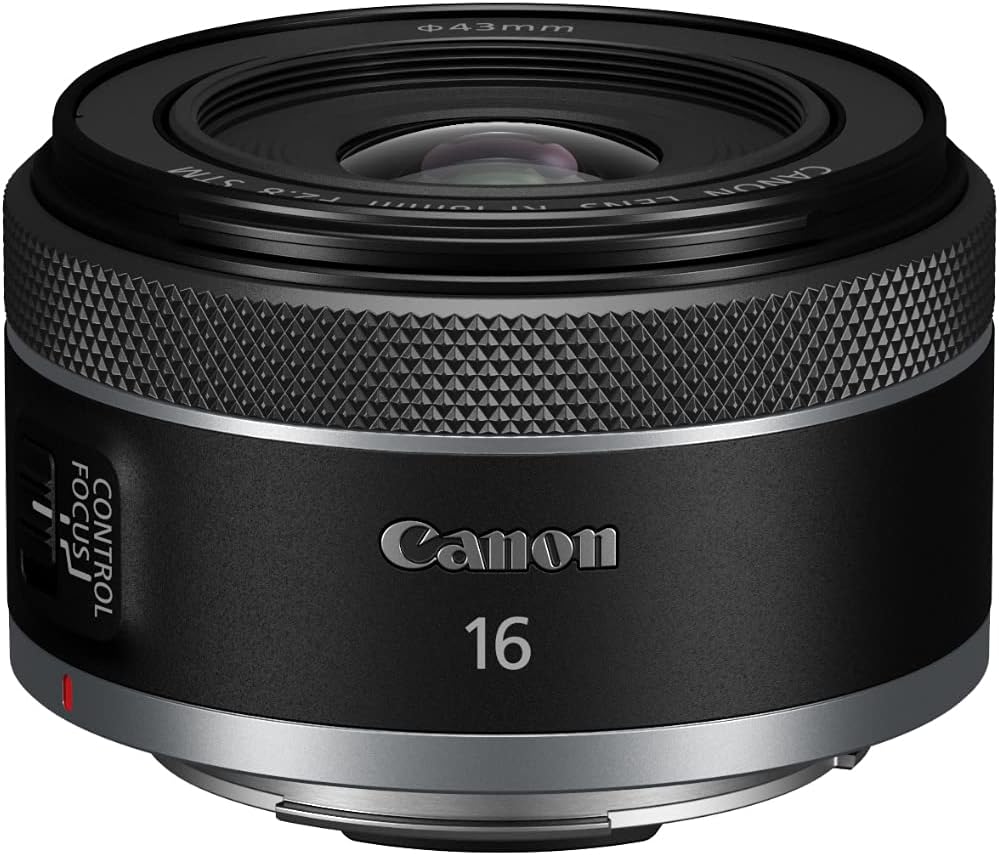
Canon RF16mm F2.8 STM Lens | Mirrorless Ultra Wide-Angle, Fixed Focal Length Lens, Compatible with EOS R Series Mirrorless CamerasProduct image from current catalog data
Best Ultra-Wide

Canon RF16mm F2.8 STM Lens | Mirrorless Ultra Wide-Angle, Fixed Focal Length Lens, Compatible with EOS R Series Mirrorless Cameras

By Canon

9.1Excellent matchFeature and use-case score

Canon's first ultra wide-angle fixed focal length RF lens, at a constant f/2.8, focusing as close as 5.11 inches, and sharing the 50mm's 43mm filter thread.

  • Canon's first ultra wide-angle fixed focal length RF lens, at a constant f/2.8 maximum aperture
  • Minimum focusing distance of 5.11 inches with maximum magnification of 0.26x
  • Gear-type stepping motor STM for smooth, quiet continuous autofocus in video
See Price at the store →Price, delivery, and configuration can change at the retailer.
ByTopFiveFind Research Desk

How this was made: AI-assisted research and drafting organize the evidence. Exact product identity, source claims, owner-feedback patterns, conflicts, and publication checks are documented before indexing. No hands-on or human-expert testing is claimed unless a page explicitly shows that evidence. Read the full methodology.

Best fitBest Ultra-Wide
CategoryVacuum Sealers
BrandCanon
Catalog score9.1 / 10

Product overview

Canon RF 16mm F2.8 STM: What to Know

Sixteen millimetres on full frame is genuinely wide, wide enough that composition changes rather than just widens: foreground objects loom, interiors open up and a ceiling or a sky becomes part of the frame whether you wanted it or not. Canon describes this as its first ultra wide-angle fixed focal length RF lens, and at f/2.8 it is bright for the category, which matters because ultra-wide work is disproportionately indoors, at night, and in astrophotography where every stop counts.

The close focusing is the feature people underestimate. A minimum focusing distance of 5.11 inches with a maximum magnification of 0.26x means you can put the lens almost against a foreground subject while keeping the whole background in frame, which is the exaggerated-perspective look that ultra-wide lenses do and nothing else can. On a standard zoom the same composition is impossible.

Two practical advantages follow from its size. It is supremely lightweight and compact for a full-frame ultra-wide, which is Canon's own framing and is unusual for the category, where ultra-wides are normally bulbous. And the 43mm filter thread is the same as the RF 50mm F1.8, so if you own both primes, one set of filters covers both. For anyone buying into RF on a budget, those two lenses plus one filter kit is a coherent and cheap starting system.

The things to know: Canon lists no optical stabilisation here, so handheld low-light again depends on body IBIS, and an f/2.8 ultra-wide prime is a specialist rather than a general lens. On an APS-C body it behaves like roughly a 26mm, which is a useful everyday wide rather than an ultra-wide, so the character of the lens changes completely depending on the body.

Key Listed Features

01

Canon's first ultra wide-angle fixed focal length RF lens, at a constant f/2.8 maximum aperture

02

Minimum focusing distance of 5.11 inches with maximum magnification of 0.26x

03

Gear-type stepping motor STM for smooth, quiet continuous autofocus in video

04

43mm filter thread shared with the RF 50mm F1.8, and unusually light and compact for a full-frame ultra-wide

Buying questions

Quick Answers

Is 16mm too wide for general use?

On a full-frame body, usually yes for general use and that is the point. At 16mm, faces near the edge of the frame distort, straight lines bend near the corners and everything feels further away than it looked. It is a deliberate tool for interiors, landscape, architecture and night skies. Used as a walkabout lens it produces photographs full of empty foreground. On APS-C the crop turns it into roughly a 26mm, which genuinely is a usable everyday wide.

Why does the shared 43mm filter thread matter?

Because filters are expensive and sized to the thread. A circular polariser or a neutral density filter for a 43mm thread costs a fraction of one for an 82mm, and owning two primes that take the same size means buying each filter once. Canon's RF 16mm and RF 50mm both being 43mm is a quiet piece of system design, and for someone building a first kit it is worth factoring into which two lenses to start with.