TopFiveFind may earn from qualifying purchases. Rankings are editorial starting points, not hands-on test claims.
Home/Vacuum Sealers/Canon EF-S 18-55mm f/3.5-5.6 is STM Camera Lens
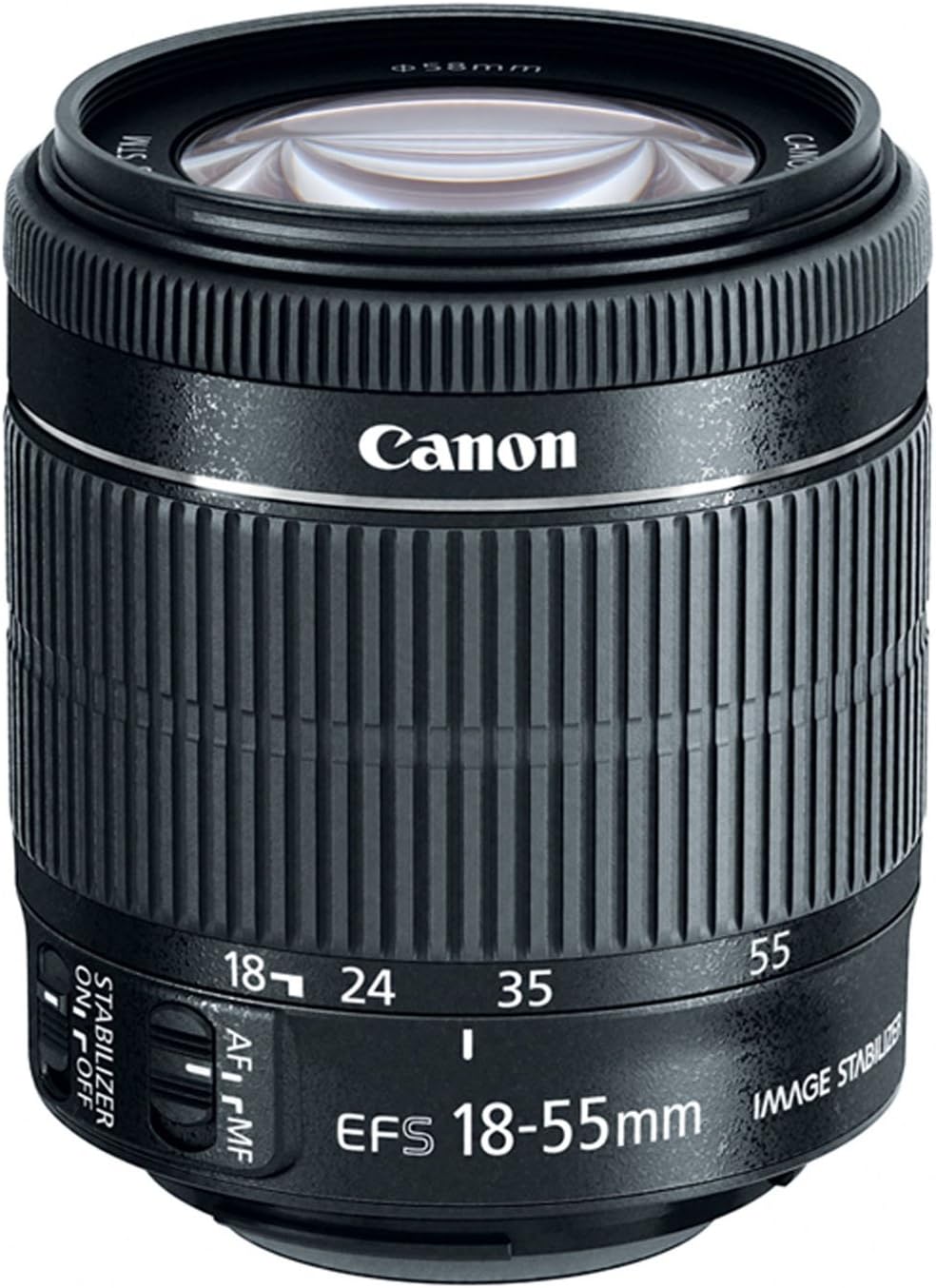
Canon EF-S 18-55mm f/3.5-5.6 is STM Camera LensProduct image from current catalog data
Best Standard Zoom

Canon EF-S 18-55mm f/3.5-5.6 is STM Camera Lens

By Canon

9.6Excellent matchFeature and use-case score

Up to four stops of stabilisation and a 0.82 foot minimum focusing distance maintained across the entire zoom range, with manual focus possible while still in AF mode.

  • Optical Image Stabilizer rated for up to four equivalent stops of shake correction
  • Minimum focusing distance of 0.82 ft (0.25 m) maintained across the full zoom range
  • Six-group zoom system with a stepping motor supporting EOS Movie Servo AF for quiet continuou...
See Price at the store →Price, delivery, and configuration can change at the retailer.
ByTopFiveFind Research Desk

How this was made: AI-assisted research and drafting organize the evidence. Exact product identity, source claims, owner-feedback patterns, conflicts, and publication checks are documented before indexing. No hands-on or human-expert testing is claimed unless a page explicitly shows that evidence. Read the full methodology.

Best fitBest Standard Zoom
CategoryVacuum Sealers
BrandCanon
Catalog score9.6 / 10

Product overview

Canon EF-S 18-55mm f/3.5-5.6 IS STM: What to Know

Kit zooms have a poor reputation and this one does not deserve it. Three published specifications make the case. Optical Image Stabilizer rated for up to four equivalent stops of shake correction is a genuine capability, not a token: it is what makes f/3.5 to f/5.6 workable indoors on static subjects. The minimum focusing distance of 0.82 feet, 0.25 metres, applies across the full zoom range rather than only at the wide end, which is unusual and means you can get close at 55mm where close-focus is most useful. And manual focus adjustment is possible while the lens is still in autofocus mode, which saves switching a physical lever every time you want to nudge focus.

The video design is deliberate too. Canon pairs a six-group zoom system with a stepping motor to support EOS Movie Servo AF for smooth, quiet continuous autofocus during movie shooting. On a DSLR, where video autofocus is historically poor, that combination is the difference between usable and unusable footage.

This is an EF-S lens, which on a DSLR means APS-C bodies only, the Rebel line, the 90D and similar. Unlike the mirrorless RF-S system it cannot be mounted on a full-frame body at all. On APS-C the 18 to 55mm range frames like roughly 29 to 88mm, which is why it is the standard kit lens: wide enough for a room, long enough for a person.

What you give up is aperture and reach. F/5.6 at 55mm is dark, and 55mm is short. It is the lens that comes with the camera for a reason, and the honest upgrade path is to add the 50mm f/1.8 for low light rather than to replace this with another zoom.

Key Listed Features

01

Optical Image Stabilizer rated for up to four equivalent stops of shake correction

02

Minimum focusing distance of 0.82 ft (0.25 m) maintained across the full zoom range

03

Six-group zoom system with a stepping motor supporting EOS Movie Servo AF for quiet continuous video autofocus

04

Manual focus adjustment possible while still in AF mode, and EF-S mount for APS-C bodies only

Buying questions

Quick Answers

Is the kit lens worth keeping?

Yes, for most people. The IS STM version specifically has four stops of stabilisation, quiet video autofocus and close focus across the range, which covers everyday photography competently. The usual mistake is replacing it with another mid-range zoom, which changes little. The upgrade that actually transforms results is adding a fast prime for low light and portraits, which is why the 50mm f/1.8 and this lens are the standard two-lens kit.

What does manual focus in AF mode mean?

On many lenses you must flip a switch from AF to MF before touching the focus ring, and turning the ring while in AF can damage the motor. This lens permits manual adjustment while still in autofocus mode, so you can let the camera focus and then fine-tune by hand without reaching for a switch. For macro-distance work and for video, where you often want to override by a small amount, it removes a real annoyance.