Buyer checklist
How to Choose a Wine Cellar
Start with your actual bottle shapes and one shared storage target, then compare cooling technology, room-temperature limits, cabinet clearances, controls, electrical data, maintenance, and support. Advertised bottle count is a layout claim, not a universal fit guarantee.
01Map the bottle mix
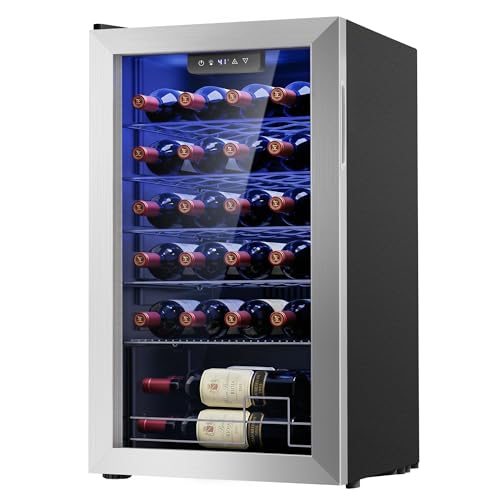
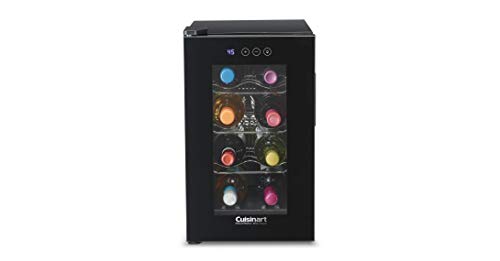
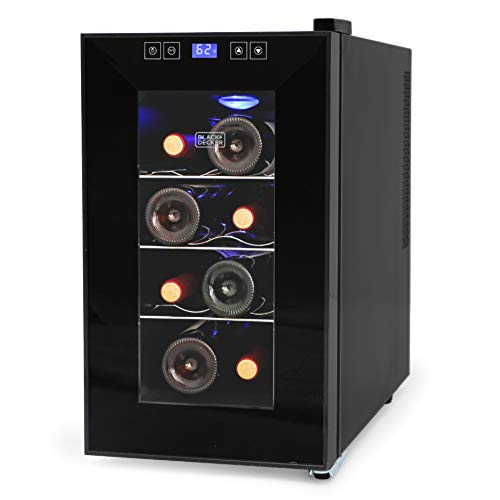
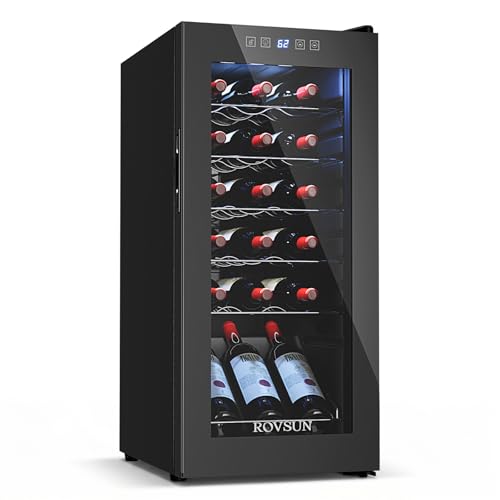
Standard 750-millilitre Bordeaux bottles are the usual capacity baseline. Champagne, Burgundy, tall, wide-shouldered, magnum, and irregular bottles can reduce capacity or require shelves to be moved or removed.
02Choose the cooling type
Thermoelectric models avoid a compressor but their achievable minimum can depend heavily on room temperature. Compressor models usually cover a wider operating envelope, while still producing normal cycling, fan, and refrigerant-flow sounds.
03Check zones and controls
A single-zone cabinet gives the whole collection one setpoint. Confirm whether the display shows the setting or measured cabinet air, the adjustment range, lock behavior, power-loss response, alarms, and any Fahrenheit/Celsius control.
04Plan the full footprint
Measure the body plus ventilation, cord, hinge, handle, door swing, shelf withdrawal, cleaning, and service access. Treat freestanding and built-in claims cautiously whenever the exact manual and product page disagree.
Wine Cellar Questions
Will every advertised bottle fit?
No. Capacity depends on bottle diameter, shoulder, length, orientation, shelf spacing, and the space needed for the door to close. Compare your actual collection with the documented rack layout.
Can one single-zone cooler hold reds and whites separately?
It can store different wine types together at one compromise temperature, but it cannot maintain independent red and white setpoints at the same time.
Can a freestanding wine cellar be placed inside cabinetry?
Only when the exact model manual explicitly permits that installation and provides clearances and a ventilation path. Compact dimensions or marketing phrases do not establish zero-clearance use.
Does the displayed temperature equal bottle temperature?
Not necessarily. Displays may show a setpoint or cabinet-air sensor reading. Bottle temperature changes more slowly and can vary with position, loading, airflow, room conditions, and door openings.
Is a glass door complete light protection?
No. Double- or triple-pane glass can improve insulation, and some listings claim ultraviolet protection, but transmission performance needs model-specific evidence. Keep wine away from direct sunlight and heat.
Has TopFiveFind tested these wine cellars?
No. This guide reconciles exact identifiers, manufacturer pages, manuals, catalog records, and warranty terms; it does not claim hands-on temperature, capacity, noise, energy, glass, or durability testing.