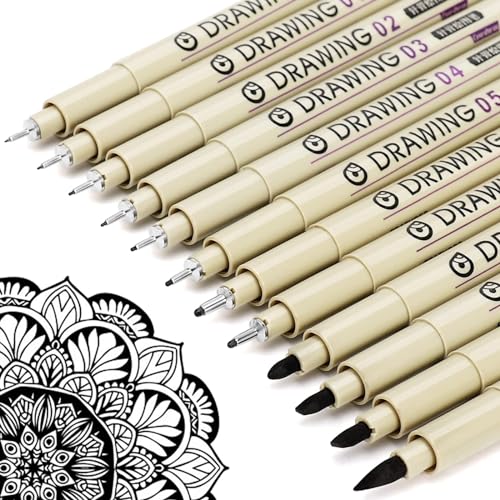
Start with the medium, surface, and finished result rather than the largest piece count. Then compare exact contents, tip or core behavior, paper compatibility, storage, safety labels, permanence evidence, replacement options, and support.
01Match medium to surface
Dry pencils, pigment fineliners, acrylic markers, watercolor, oil pastel, and acrylic paint behave differently. Check paper weight, tooth, porosity, coating, drying, bleed, adhesion, and any approved sealing or heat-setting method before starting finished work.
02Read the real inventory
A bundle count can include sheets, pads, tools, packaging, duplicate colors, or accessories. Use the printed packing list and confirm exact colors, sizes, tips, cores, canvases, brushes, paper, storage, refills, and replacement parts.
03Test before the project
Swatch every color and line width on the actual surface. Test layering order, erasing, blending, water exposure, marker bleed, drying, opacity, fixative, sealing, and wash behavior because broad compatibility claims do not guarantee every combination.
04Verify safety and permanence
Check delivered warnings, age grading, batch and manufacturer labels, and any ASTM or EN conformity statement. Non-toxic does not mean edible or food safe, while archival, fade-resistant, and acid-free claims need product-specific evidence.
Art Supply Questions
Does the biggest set offer the best value?
Not automatically. Compare usable media, color overlap, paper quality, tool sizes, storage, replacement availability, and the supplies needed for your actual projects rather than relying on the headline piece count.
Can one sketchbook handle every medium?
No. Dry-media sketch paper, marker paper, watercolor paper, acrylic paper, and canvas are engineered for different loads and surface behavior. Follow the exact pad limits and test unfamiliar media.
Are multi-surface paint markers permanent everywhere?
No. Adhesion and wash resistance vary with porosity, finish, cleaning, drying, abrasion, and the approved sealer or heat-setting process. Never guess a baking temperature or use art paint on food-contact surfaces.
Does ASTM D-4236 mean an art material is completely safe?
No. It concerns toxicological review for chronic hazards and appropriate labeling. Users must still follow warnings, age guidance, supervision, ventilation, storage, and restrictions such as food-contact exclusions.
Do archival or fade-resistant claims guarantee permanent artwork?
No. Long-term results depend on the exact pigment or ink, paper, binder, light exposure, humidity, pollutants, storage, framing, and independent test method. Look for product-specific evidence when permanence matters.
Has TopFiveFind tested these art supplies?
No. This guide reconciles exact product identifiers, current manufacturer and catalog records, safety guidance, and documented limitations; it does not claim hands-on color, paper, ink, paint, safety, or durability testing.